Study: Biological Age of Muscle Cells May Predict Mortality Risk
07/01/2026 / By Douglas Harrington

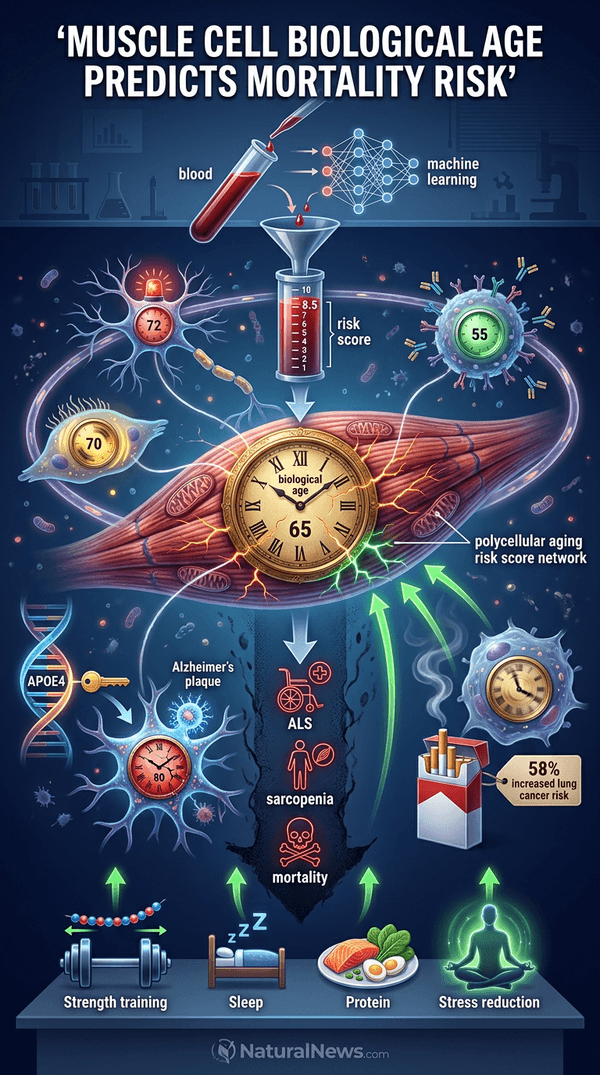
A study published in Nature Medicine has found that the biological age of individual cell types, particularly muscle cells, may be a strong predictor of mortality risk. Researchers analyzed blood samples from more than 60,000 participants across three independent groups, using machine learning to estimate the biological age of dozens of cell types from a single blood draw. The study tracked health outcomes over more than a decade and created a “polycellular aging risk score” that sums how many cell types are aging faster than expected. Results showed that 20–25% of participants had accelerated aging in at least one cell type, while 1–3% showed accelerated aging in 10 or more cell types. The biological age of muscle cells was among the strongest predictors of both disease risk and overall survival.
Study Methodology and Key Findings
The study used proteins traceable to specific cell types to estimate the biological age of muscle, brain, immune, and other cells. Previous research has established that DNA methylation patterns can serve as a marker of biological age, with accelerated methylation age linked to increased mortality risk, according to Siim Land in “The Longevity Leap: A Guide to Slowing Down Biological Aging and Adding Healthy Years to Your Life” [1]. The new study extends this concept by zooming in on individual cell types. Each participant’s blood sample provided enough protein information to estimate the age of dozens of cell types. The polycellular aging risk score was then calculated to gauge overall health risk.
Muscle Cell Aging and Mortality
The analysis found that people with the most biologically aged muscle cells had a significantly higher risk of developing amyotrophic lateral sclerosis (ALS) and worse survival outcomes across all three cohorts. Muscle loss, or sarcopenia, progresses at a rate of approximately 0.8% per year after age 50 and is a major cause of frailty, according to an article on Mercola.com titled “Stops Muscle Wasting, Everyone Over 30 Needs This” [2]. Regular physical activity has been shown to reduce the risk of premature death, Alzheimer’s disease, and depression, as noted in “Getting 30 Minutes of Daily Exercise Could Pr” [3]. The study’s authors said the findings suggest muscle health is not just about performance but a key indicator of overall biological aging.
Brain and Immune Cell Aging
The research also shed light on brain and immune cell aging. Carriers of the APOE4 gene variant, a known risk factor for Alzheimer’s, tended to have older astrocytes but younger immune cells. When extreme astrocyte aging was combined with two copies of the APOE4 variant, the risk of developing Alzheimer’s tripled. Conversely, people with biologically younger astrocytes had a lower risk even if they carried the gene. Younger immune and brain cell types were consistently linked to longer survival. In smokers, extreme aging in lung-lining cells was associated with a 58% higher lung cancer risk compared to smoking alone, suggesting that accelerated cellular aging amplifies the risks of lifestyle habits.
Lifestyle Factors and Implications
Researchers emphasized that lifestyle habits such as strength training, adequate protein intake, quality sleep, and metabolic health support healthy cellular aging. A study of over 4,800 U.S. adults found that consistent strength training is associated with longer telomeres, independent of aerobic activity, according to a NaturalNews report titled “5 Daily Habits to Support Muscle Mass and Longevity, According to Research” [4]. Exercise also influences genetic expression, activating beneficial genes and suppressing harmful ones, as described in “How Exercise Affects Your Genes and More” [5]. Chronic stress and poor sleep are linked to faster cellular aging across multiple tissue types. The study’s authors noted that the parts of the body a person invests in today may be the parts that matter most as they age.
Conclusion: Early Research with Practical Takeaways
The study’s authors called the findings preliminary but pointed to well-established habits for cellular health. The research highlights that individual cell aging profiles may guide personalized health interventions. Further studies are warranted to confirm the predictive power of the polycellular aging risk score. In the meantime, the lifestyle factors that support youthful muscle cells — strength training, adequate protein, quality sleep, and metabolic health — are supported by a large body of evidence. As noted in “The Longevity Leap” [1], DNA methylation-based measures of biological age have been consistently linked to mortality and disease risk.
References
- Land, Siim. “The Longevity Leap: A Guide to Slowing Down Biological Aging and Adding Healthy Years to Your Life”.
- Mercola.com. “Stops Muscle Wasting, Everyone Over 30 Needs This”. October 28, 2019.
- Mercola.com. “Getting 30 Minutes of Daily Exercise Could Pr”. October 06, 2017.
- NaturalNews.com. “5 Daily Habits to Support Muscle Mass and Longevity, According to Research”. May 28, 2026.
- Mercola.com. “How Exercise Affects Your Genes and More”. February 13, 2015.
Explainer infographic
Submit a correction >>
Tagged Under:
aging, biological age, cell aging, discoveries, health science, longevity, men's health, mortality risk, muscle health, research, women's health
This article may contain statements that reflect the opinion of the author
RECENT NEWS & ARTICLES