Randomized Trial Finds Faster Walking Pace Tied to Greater Frailty Improvement
10/04/2026 / By Chase Codewell
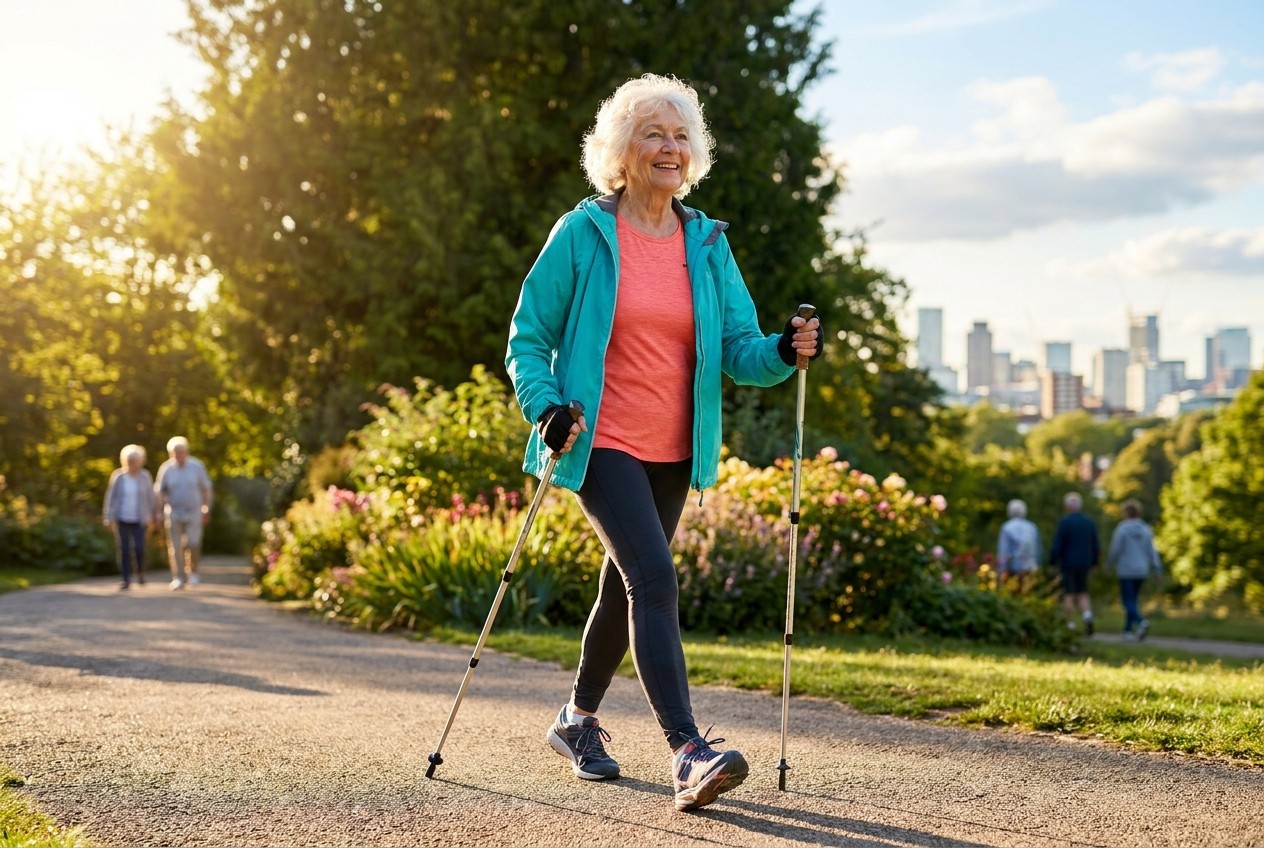
A randomized controlled trial found that older adults who were frail or at risk of frailty showed greater improvement in frailty scores when they walked at a higher intensity than when they walked at a self-selected comfortable pace, according to a report published Oct. 1, 2026.
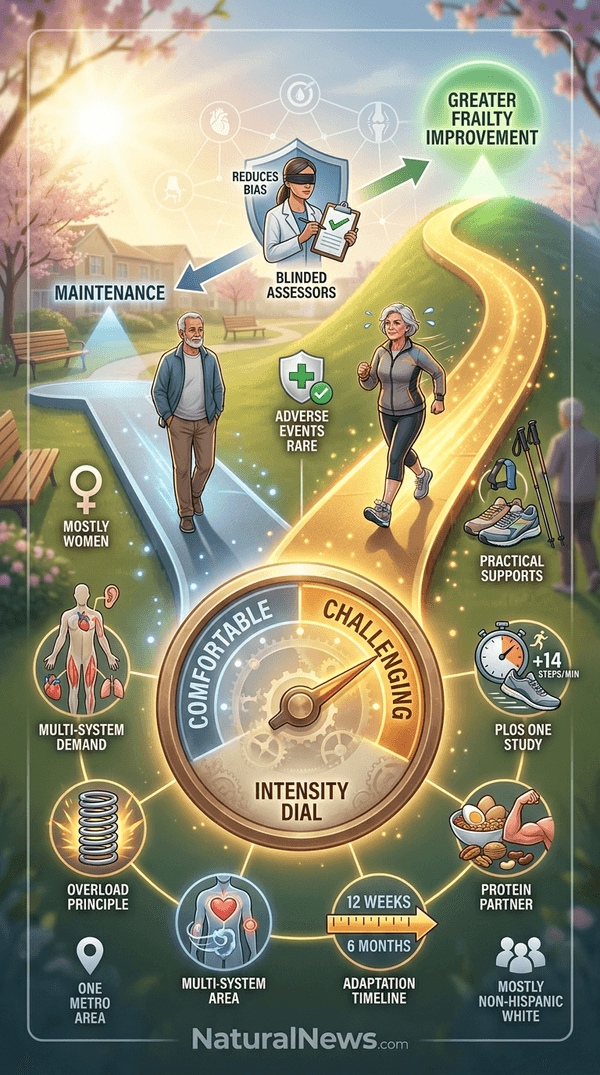
The trial enrolled 105 participants living in retirement communities, with 47 assigned to a high-intensity walking group and 58 assigned to a comfortable-pace group, the report stated. Frailty was assessed before and after the programs by assessors who did not know which group each participant belonged to, according to the report.
The report said the high-intensity group showed more improvement in frailty than the comfortable-pace group. Researchers noted that the findings are limited because most participants were women, most identified as non-Hispanic white, and all participating communities were located in a single metro area [1].
Study Design and Participants
The study was a randomized controlled trial conducted among older adults living in retirement communities who were already frail or at risk of becoming frail, according to the report. Participants were classified as frail or prefrail based on criteria including energy levels, strength, and physical activity [1].
One group performed high-intensity walking workouts at a pace described as challenging, while the other group walked at its own comfortable, self-selected speed, the report stated. Frailty was measured with standard assessments before and after the walking programs, and assessors were blinded to group assignments [1].
The report stated that the trial analyzed 105 participants, with 47 in the high-intensity group and 58 in the casual-pace group. Demographic limitations included a majority of women, mostly non-Hispanic white participants, and a single metro area, according to the report. The report said these factors may limit how broadly the results apply to more diverse populations [1].
Main Findings
The report stated: “The group that walked at a higher intensity showed more improvement in their frailty than the group that walked at a comfortable pace.” The report said walking alone was not enough to improve frailty and that the level of effort appeared to matter [1].
Previous research from the same team found that high-intensity walking programs produced measurable improvements in frailty scores and walking speed among adults already living with frailty, the report said. A related review cited by the report found that high-intensity exercise sustained for at least 12 weeks tended to have the most beneficial effect on physical frailty, with the largest improvements appearing around six months [1].
The report said the effect on frailty appeared clearly in the trial, though it noted the small sample size. A separate study published in PLOS ONE found that increasing walking pace by 14 steps per minute improved physical function in older adults, with the report stating that participants were asked to walk as fast as safely possible during the 12-week intervention [1].
Why Intensity May Matter
Pushing walking speed asks more of muscles, heart, lungs, and balance systems at once, which may prompt the body to adapt and rebuild strength, according to the report. Frailty involves not only muscle but also gait speed, energy, and balance; fast-paced walking challenges all these systems together, the report stated [1].
The report said adequate protein intake may help the body respond to the extra demand of a challenging walk. The study did not establish a mechanism, but researchers suggested the extra demand may lead to adaptation rather than maintenance, according to the report.
Research on exercise and aging has indicated that even elderly individuals can make significant headway when taking up a fitness routine, and studies have shown that it is never too late to start, even for those who have never exercised before [2]. Other research has suggested that exercise improves autonomic control of the heart in people of all ages, including aged subjects [3].
Safety and Practical Guidance
The report stated: “Adverse events during the high-intensity walking sessions were rare.” Frailty and pre-frailty affect a significant share of older adults globally, and pre-frail people are likely to progress toward frailty over time, the report stated [1].
The report suggested starting with a baseline check with a doctor or physical therapist, especially if balance, joint pain, or other conditions are concerns. It recommended picking up the pace gradually, trying interval-style walking, making consistency the goal, and using support such as walking poles, supportive shoes, or a walking partner [1].
The report said the biggest benefits build over months, not days, so regular sessions matter more than any single walk. Frailty is also associated with the presence of other long-term health conditions including diseases of the heart and circulatory system, diabetes, chronic lung disease, stroke, dementia, disability, and arthritis, according to one source [4].
Conclusion
The trial suggests frailty may not be irreversible and that walking pace may be a modifiable factor, according to the report. The report stated that a small trial in a handful of retirement communities cannot settle the question on its own [1].
Researchers said the findings provide some reassurance that faster-paced walking can be introduced safely in older adults who are frail or at risk of frailty. The report concluded that pace may be worth attention to help prevent falls and fractures later, but further research is needed.
A separate study linked faster walking speed to lower cognitive decline risk in older adults, with researchers finding that adults aged 80 and older with faster walking speeds had approximately 50% lower risk of developing cognitive impairment compared to those who walked more slowly [5]. Another large study suggested that walking speed may predict lifespan more accurately than traditional markers like blood pressure and cholesterol [6].
References
- NaturalNews.com. “Study: Brisk Walking Pace of 14 Extra Steps Per Minute Improves Physical Function in Older Adults”. NaturalNews.com. May 10, 2026.
- Mercola.com. “Stops Your Muscles From Shrinking Even If Yo”. Mercola.com. September 13, 2019.
- DVIPSONE 224. “Integrative Pain Medicine The Science and Practice of Complementary and Alternative Medicine in Pain”.
- Lumley John. “Ageing dont panic embrace the challenge”.
- NaturalNews.com. “Study Links Faster Walking Speed to Lower Cognitive Decline Risk in Older Adults”. NaturalNews.com. July 16, 2026.
- NaturalNews.com. “Walking speed may predict lifespan better than blood pressure, study finds”. NaturalNews.com. April 2, 2026.
Explainer Infographic
Submit a correction >>
Tagged Under:
active lifestyle, aging, brisk walking, brisk walking pace, Censored Science, exercise, fitness, health science, lifestyle, longevity, natural health, prevention, Randomized controlled trial, research, slender, walking pace, Women's Fitness, women's health
This article may contain statements that reflect the opinion of the author
RECENT NEWS & ARTICLES