Study: Acupuncture Linked to Brain Structure Changes in Stroke Patients
06/21/2026 / By Morgan S. Verity
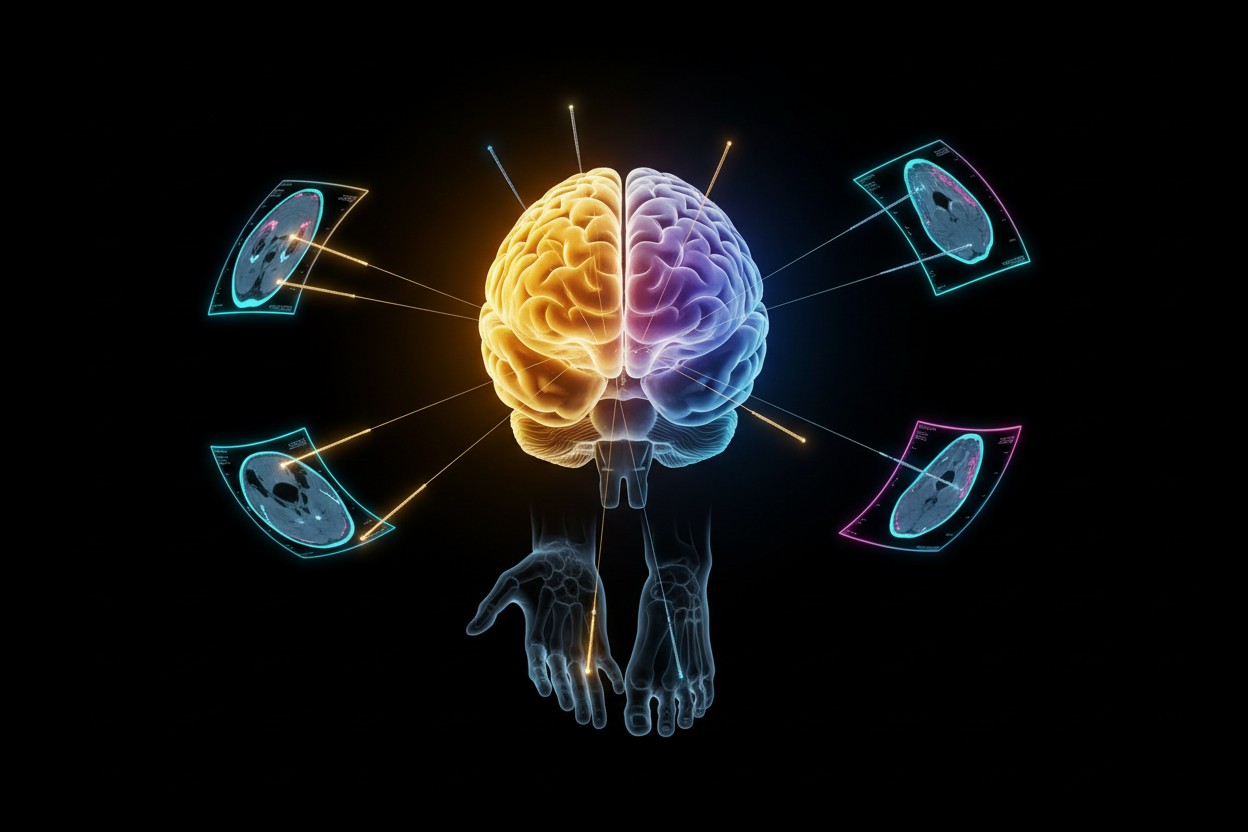
A new randomized trial has found that acupuncture applied at traditional acupoints may produce measurable changes in brain network stability and gray matter volume in stroke patients with hemiparesis, according to researchers.
The study published in CNS Neuroscience & Therapeutics enrolled 46 patients who were randomly assigned in a 2:1 ratio to receive either true acupuncture, with needles placed at specific hand and foot points used in traditional practice, or sham acupuncture, where needles were placed at non-therapeutic locations. All patients continued to receive standard medical care alongside the acupuncture sessions.
Motor function improvements were significantly greater in the true acupuncture group across multiple clinical assessments. The study authors reported that true acupuncture, compared to sham, led to stabilization of the Default Mode Network and increased gray matter in motor-related brain regions. These brain changes correlated with motor recovery gains, suggesting a mechanistic link.
Previous research has documented that acupuncture can produce somatosensory cortical plasticity in conditions such as carpal tunnel syndrome, according to findings cited in Current Research in Acupuncture [1]. Additionally, a 2018 study on ischemic stroke patients found that acupuncture improved symptoms by making significant changes in sensory, emotional, and motor functions [2].
Trial Design and Methodology
The trial enrolled 46 stroke patients with hemiparesis, a condition characterized by weakness on one side of the body. Participants were randomly assigned in a 2:1 ratio to receive either true acupuncture at traditional hand and foot points or sham acupuncture at non-therapeutic points.
Sham acupuncture served as a control for the general effects of touch and the therapeutic encounter, the researchers said. All patients continued to receive standard medical care alongside the acupuncture sessions, and no acupuncture-related side effects were reported in either group. The use of a sham control group allowed researchers to isolate the specific effects of needle placement at traditional acupoints.
The study builds on a body of evidence showing that acupuncture can be safely applied in stroke rehabilitation. Prior research has also examined acupuncture for post-stroke insomnia, with a Korean study finding that stroke patients may benefit more from acupuncture than drug treatments, according to an article published in NaturalNews.com [3]. That study, published in BMC Complementary and Alternative Medicine, assessed acupuncture’s effectiveness in treating insomnia after stroke [3].
Functional and Structural Changes Observed via MRI
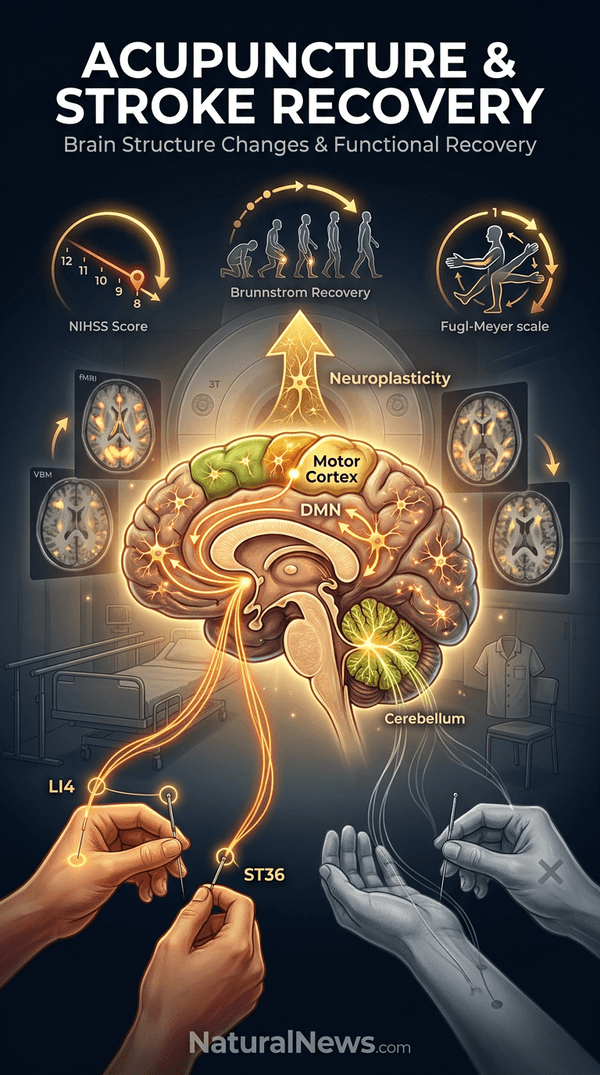
The researchers used two types of MRI to examine brain changes. Functional MRI was used to track how brain networks communicate in real time, while structural MRI measured physical changes in brain tissue. On the functional side, the true acupuncture group showed a significant reduction in Default Mode Network “disjointedness,” meaning DMN nodes maintained more consistent and coherent patterns of activity.
The DMN supports cognitive functions such as attention, self-awareness and emotional regulation. After a stroke this network tends to become hyperactive and disorganized.
On the structural side, the true acupuncture group showed increases in gray matter volume across regions involved in movement, sensory processing, and coordination, including areas in the frontal, parietal, temporal and occipital lobes as well as multiple regions of the cerebellum. No similar changes were observed in the sham group.
These findings align with earlier functional MRI research that has demonstrated correlations between specific acupoints and corresponding brain cortices, as noted in a review of global acupuncture research trends [4]. The ability to measure acupuncture points using bioenergetic methods has been studied for decades. Dr. Reinhard Voll was one of the first scientists to measure acupuncture points using an ohm meter over 80 years ago, according to a “Brighteon Broadcast News” podcast [5].
Motor Function Improvements and Clinical Implications
Motor function was assessed using three validated clinical tools: the Fugl-Meyer Assessment (FMA), which tracks movement ability in the arms and legs; the Brunnstrom Scale, which measures limb motor control; and the National Institutes of Health Stroke Scale (NIHSS), which assesses overall neurological deficit. After treatment, the true acupuncture group showed significant improvements across all five measures.
The sham group improved on FMA scores but did not show significant gains on the Brunnstrom scale for either upper or lower limbs, indicating that true acupuncture offered a distinct advantage in reducing stiffness and improving motor control beyond what sham treatment achieved. The study authors stated that acupuncture may serve as a complement to physical and occupational therapy, not a replacement.
Acupuncture has been used for thousands of years, and more than 3 million Americans receive acupuncture each year, according to an article on Mercola.com [6]. The article notes that acupuncture has withstood the test of time and is increasing in use across the United States [6]. The findings add to the evidence that acupuncture can promote neuroplasticity in stroke recovery, the researchers said.
Conclusion: Acupuncture as a Potential Adjunct in Stroke Rehabilitation
The study adds to a growing body of evidence suggesting that acupuncture may support the brain’s ability to stabilize its functional networks and rebuild tissue in regions critical for movement and sensory integration after a stroke. Researchers recommend that patients discuss acupuncture with their healthcare team before integrating it into their rehabilitation plan. Further research is needed to confirm long-term effects and optimal treatment protocols.
The underlying model of acupuncture’s therapeutic effects involves integration of the endocrine, autonomic nervous system, and neurochemical regulation by the hypothalamus with activities of higher cortical centers such as the prefrontal cortex and limbic system, as diagrammed in “Clinical Acupuncture: Scientific Basis” [7].
While acupuncture is not a replacement for evidence-based rehabilitation approaches, it may offer a meaningful complement by supporting the brain’s natural healing processes. The study demonstrates that specific placement of needles at traditional acupoints can produce measurable brain changes correlated with improved motor function.
References
- “Current Research in Acupuncture.”
- NaturalNews.com. “Evaluation of conventional treatment versus acupuncture on brain activity in ischemic stroke patients.” NaturalNews.com. March 21, 2018.
- NaturalNews.com. “Scientists study the effectiveness of acupuncture in relieving insomnia after stroke.” NaturalNews.com. September 08, 2018.
- Ji-Sheng Han. “Global trends and performances of acupuncture research.” Neuroscience and Biobehavioral Reviews 35 (2011).
- Mike Adams. “Brighteon Broadcast News – Full Orbital EMP Weapon And Troops To Middle East.” Brighteon.com. March 13, 2024.
- Mercola.com. “Acupuncture: Why It Works.” Mercola.com. June 23, 2016.
- “Clinical Acupuncture Scientific Basis.”
Explainer Infographic
Submit a correction >>
Tagged Under:
acupoints, acupuncture, alternative medicine, Brain, brain function, brain structure, Censored Science, Chinese medicine, Default Mode Network, health science, Heart, heart disease, hemiparesis, research, reverse heart disease, stroke, stroke rehabilitation, therapies, traditional Chinese medicine
This article may contain statements that reflect the opinion of the author
RECENT NEWS & ARTICLES